
European rural areas working together to adapt to climate change
NURISH
NURISH strengthens the capacity of small rural communities to adapt to climate change by co-developing, testing and re-deploying Nature-based Solutions (NbS). The project will implement a Regenerative Rural Resilience Framework (RRRF) that combines community participation, digital innovation and circular economy practices. The aim is to help rural areas thrive while addressing climate challenges such as floods, droughts, desertification, biodiversity loss and wildfires.
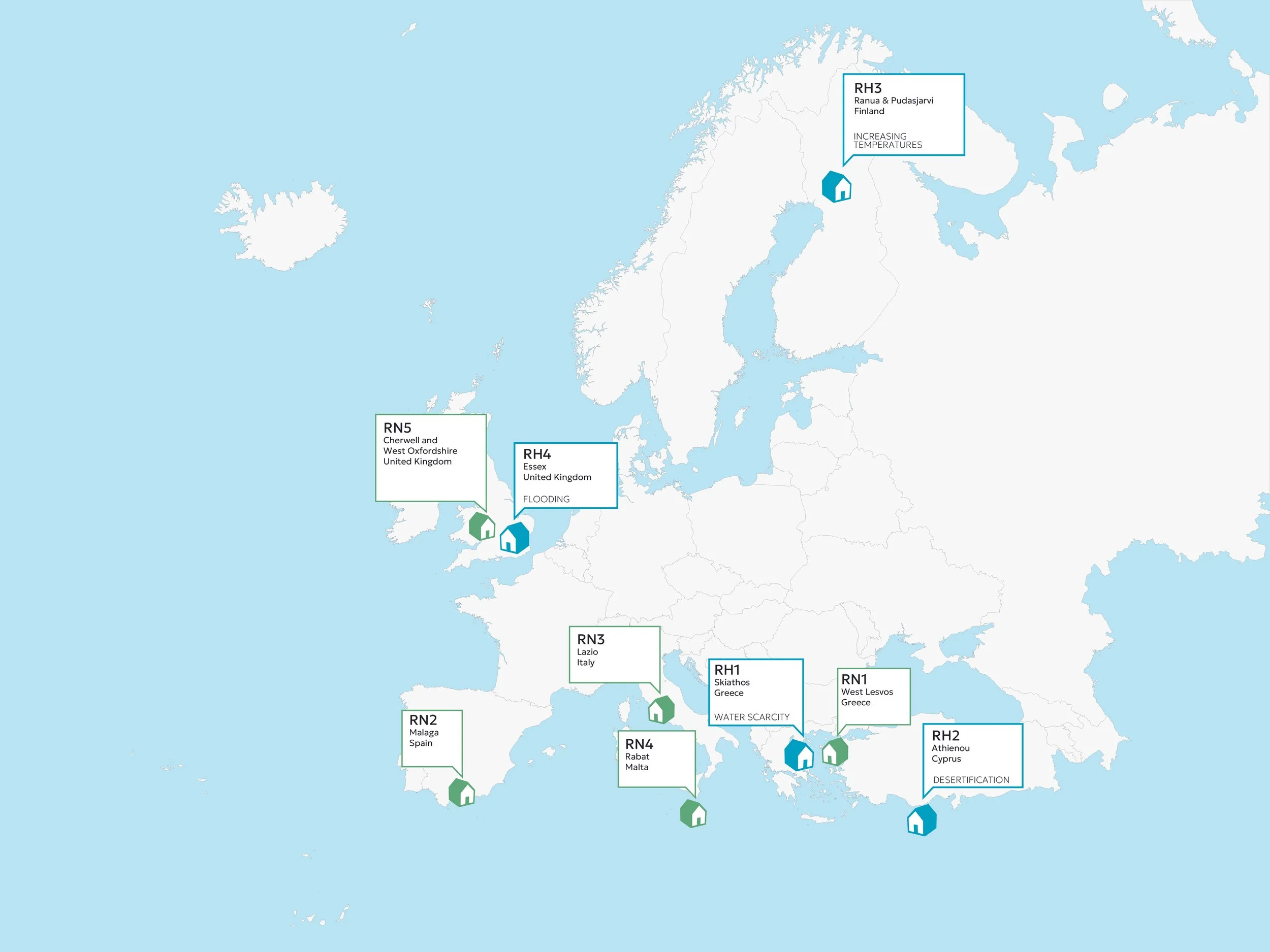
The project will demonstrate concrete, locally adapted solutions in four Resilience Hubs (RH) located in Greece, Cyprus, Finland and the UK, and transfer and scale them up through five Resilience Nodes (RN) in Greece, Spain, Italy, Malta and the UK.
Resilience Hub 3 in Ranua and Pudasjärvi
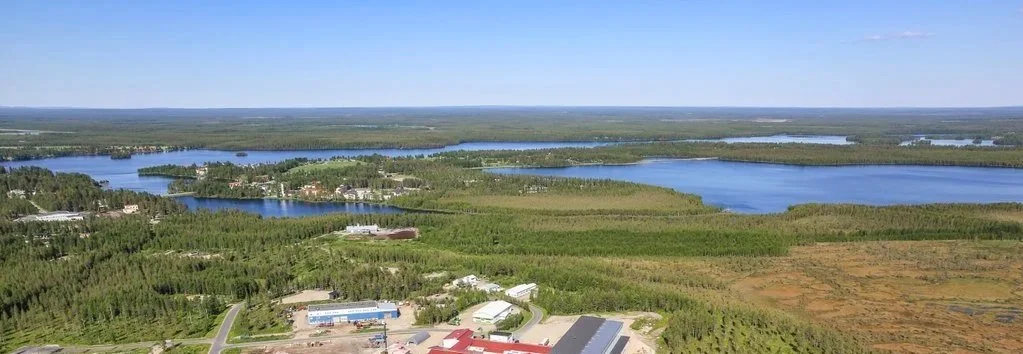
One of the four resilience centres will be located in Ranua and Pudasjärvi. The NURISH project continues the work started in Ranua in the BIKI project to use lake biomass to produce biogas and circular fertiliser. The BIKI project selected 23 lakes in Ranua and investigated the amount of humic sludge that has accumulated on their bottom over the years and its usability for biogas and circular fertiliser production. In the NURISH project, a similar survey will be carried out in lakes in Pudasjärvi, after which 2-3 lakes will be selected and a total of 1 500 cubic metres of lake bottom sludge will be dredged. The sludge will be transported to the Northern Finland Biogas Plant in Ranua, where it will be tested as a raw material for biogas and circular fertiliser.
Improving the status of water bodies
Forest drainage, agriculture and also human settlements have gradually loaded the lakes, causing significant amounts of humic sludge to accumulate at the bottom in some places. As the climate warms, lake water temperatures are also rising and, together with the humic sludge, this creates favourable conditions for aquatic vegetation. This has an impact on the ecosystem and recreational use of the lakes. The NURISH project will explore ways to remove humic sludge in a cost-effective way that will improve the long-term water quality of lakes, enhance the living conditions for fish, birds and other aquatic life and increase recreational opportunities.
The project will bring together guidance and best practice on the management of commercial forests around water bodies and provide advice to forest owners. The aim is to minimise the impact of forest management on water pollution.
The NURISH project in Ranua and Pudasjärvi is being implemented by the municipality of Ranua, North Finland Biogas Ltd, Pudasjärvi Development Ltd and VTT Technology Research Centre Ltd.
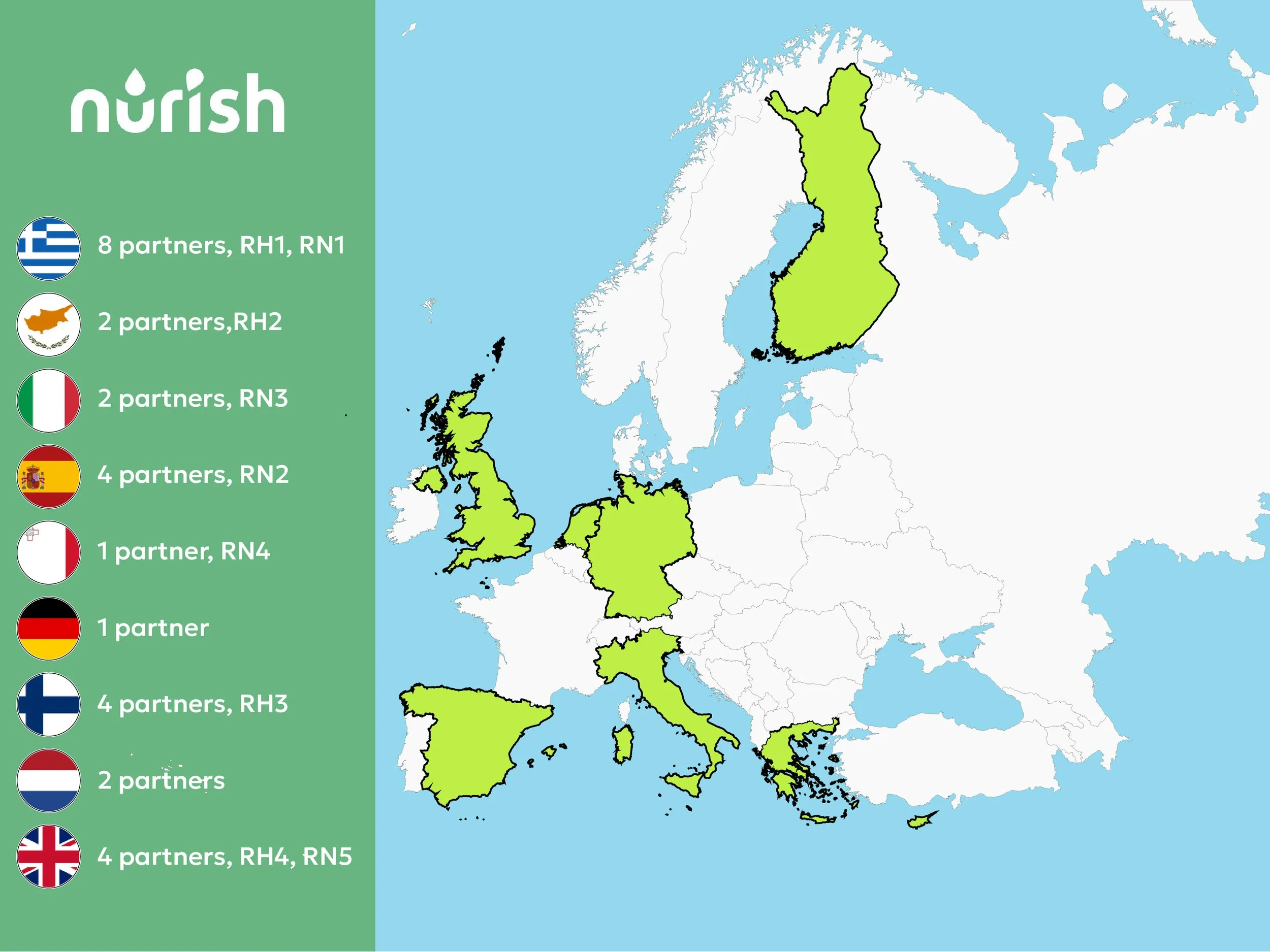
9 countries and 28 partners
The NURISH project stretches from Cyprus to Ranua. The regions have rural areas, climate change and adaptation in common

NURISH project logo
About NURISH
NURISH stands for Nurturing transformative capacities, Innovation in NBS and Harmonious resilience in rural areas, which can be translated as "nature-based innovation, transformative capacities and sustainable adaptation in rural areas".
NURISH is an innovation project of the Horizon Europe Programme (grant agreement No 101214414), funded by the European Climate, Infrastructure and Environment Executive Agency (CINEA). The project has a total budget of €8 million and will run from October 2025 to March 2030. It will involve partners from research, public administration, industry and civil society.
For more information, visit the European Commission’s CORDIS portal, the project website at www.nurish-project.eu, and the project’s social media channels:
LinkedIn: https://www.linkedin.com/company/nurish-eu-project/
Bluesky: https://bsky.app/profile/nurish-eu.bsky.social
Instagram: https://www.instagram.com/nurish_eu/
YouTube: https://www.youtube.com/@NURISH-EU
Latest news



Disclaimer: Funded by the European Union. The views and opinions expressed are those of the author(s) only and do not necessarily reflect those of the European Union or the European Climate, Infrastructure and Environment Executive Agency (CINEA). Neither the European Union nor the donor can be held responsible for them.